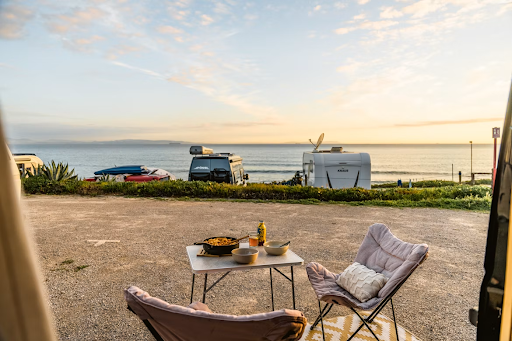
Coastal RV travel combines flexible transportation with easy access to beaches, bays, and waterfront communities. You can spend the morning walking beside the water, return to your campsite for lunch, and explore a nearby town that afternoon. The experience can also be more affordable than changing hotels every night, especially on a longer trip.
A successful route still requires careful timing since popular campgrounds fill quickly and coastal weather can affect driving conditions.
The Appeal of Shoreline Camping
Shoreline camping gives you more time outdoors without requiring a complicated daily schedule. Many coastal RV parks sit close to public beaches, fishing piers, boardwalks, and wildlife viewing areas.
The setting also changes throughout the day. An early walk may offer cooler temperatures and fewer crowds, while the evening can bring a colorful sunset over the water. Since ocean air can be damp and salty, bring a doormat, vent covers, and sealed containers for electronics. Rinse bicycles, chairs, and other outdoor equipment after exposure to sea spray.
Planning Your Seaside Route
Build your route around realistic driving times and confirmed overnight stops. Coastal roads may be slower than inland highways due to curves, bridges, and busy beach communities. For a trip lasting one week, two or three bases usually provide a more relaxed experience than moving every day, and you can find camping trip tips to make your next adventure a breeze.
Reserve your RV Park before finalizing nearby activities, particularly if you’re visiting the Rockport, Texas area during a busy travel period. Leave room for weather changes. Check forecasts each morning, avoid low-lying roads during flooding, and keep one flexible day available for adjusting your plans.
Choosing Your Coastal RV Park
Start with the practical details. Confirm the maximum site length, electrical connection, water access, and check-in window before paying a deposit. A campsite described as suitable for a large RV may still have tight turns or overhanging branches near the entrance.
Look at the park’s location in relation to the places you plan to visit. A site five miles from the beach could require a long drive during peak traffic. Amenities also matter during extended stays. Laundry facilities, showers, a pool, and indoor recreation areas can make a weeklong visit more comfortable.
Before booking, ask these questions:
- Is the site paved, gravel, or grass?
- Are pets allowed on-site and at nearby beaches?
- What is the cancellation policy during severe weather?
- Is there enough room for your vehicle and any additional transportation?
Activities by the Water
Plan water activities around local conditions and your group’s comfort level. A calm bay may suit paddleboarding or kayaking, while a breezy afternoon could be better for walking a nature trail. Check posted beach notices before entering the water and follow local guidance concerning tides, currents and wildlife.
Coastal destinations offer plenty to do on land as well. Visit a maritime museum, rent bicycles or explore seafood markets and independent shops. Bird-watching can be especially rewarding around wetlands and estuaries, where early morning often brings the most activity.
Keep towels, sunscreen, refillable water bottles, and a dry change of clothes in one easy-to-reach bag. That simple setup makes spontaneous beach stops much easier.
A coastal RV trip works best when the schedule leaves time to enjoy each stop. Confirm the campsite first, note a few priority activities, and keep open space for weather or an unexpected waterfront discovery. The result is a trip that feels flexible without becoming disorganized.
Leave a Reply